Visual Planning & Early Direction
My role combined technical art and gameplay implementation, with an emphasis on:
- Rapid UI layout and visual composition
- Asset integration under evolving constraints
- Translating abstract narrative ideas into readable, interactive visuals
- Adapting quickly to an unfamiliar engine without sacrificing cohesion
Given the compressed timeline, my priority was to establish clear visual structure early, allowing the team to iterate on content without reworking core layouts.
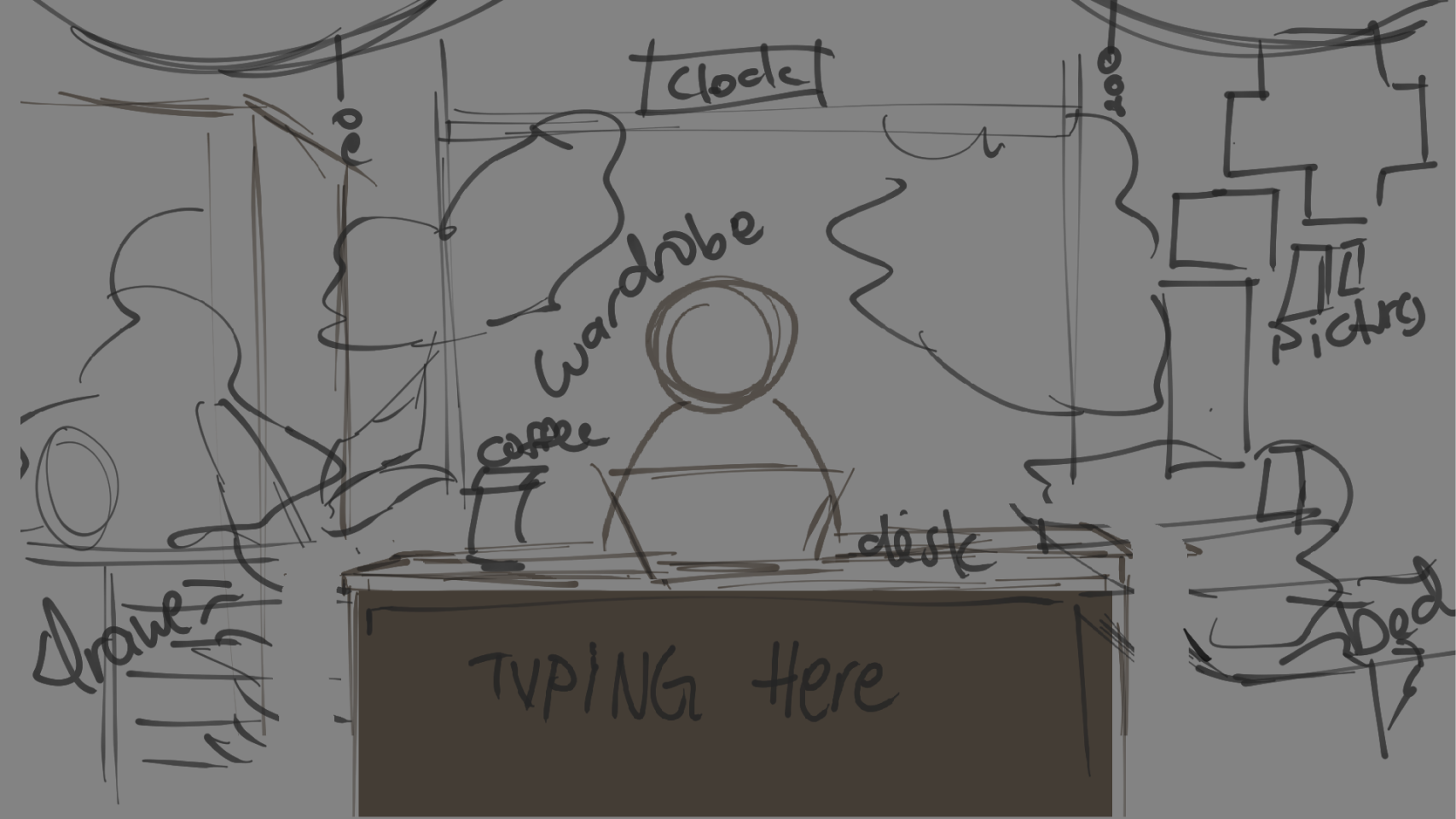
We began with quick concept sketches to define the game’s visual language — soft shapes, layered text, and floating elements that mirrored drifting thoughts.
These sketches served as a visual anchor, guiding:
- UI hierarchy and spacing
- Text readability and motion
- Layering order for foreground and background elements
Working in a New Engine: Godot
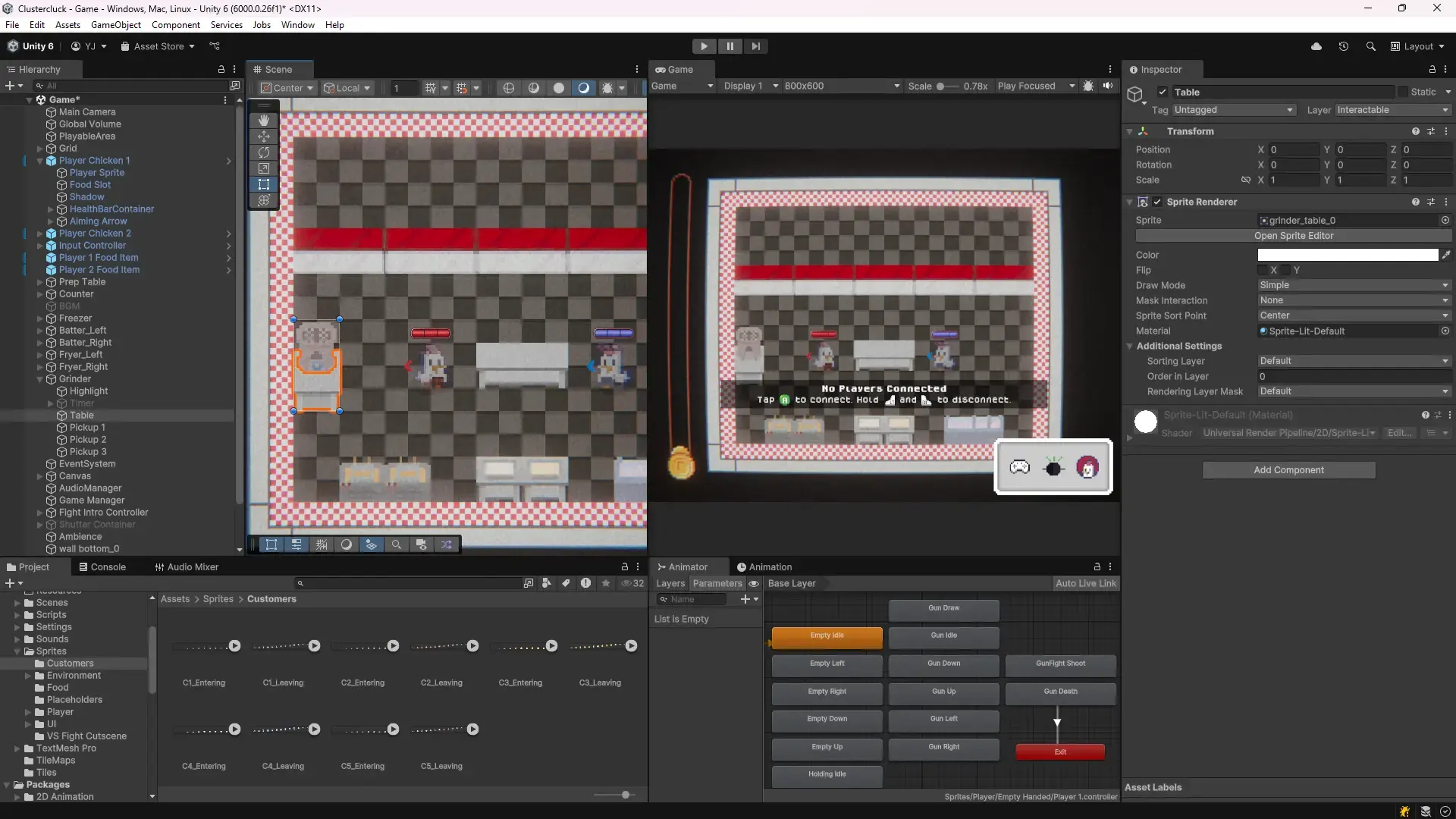
With no prior experience in Godot, every task — from UI anchoring to asset scaling — required experimentation. Unlike longer projects, there was no time to build robust tools or frameworks upfront.
I relied on transferable engine-agnostic principles:
- Understanding coordinate spaces and anchors
- Separating visual presentation from logic
- Building layouts that tolerated content changes
I rapidly tested Godot’s UI and scene system, iterating through multiple approaches until we arrived at solutions that were stable, readable, and quick to adjust as assets evolved.
UI & Asset Integration
As art assets were produced in parallel, I focused on:
- Implementing UI elements incrementally
- Maintaining consistent scale and spacing across screens
- Ensuring text and visual elements remained legible during animation and motion
This approach allowed the visuals to feel intentional and cohesive despite being assembled under severe time constraints.
Reflection
Bubble Thoughts highlighted the importance of adaptability as a technical artist — the ability to move quickly, apply fundamental principles across unfamiliar tools, and make confident decisions under pressure.
Rather than mastering Godot exhaustively, my focus was on identifying what was essential, implementing it cleanly, and ensuring the team could deliver a complete, emotionally cohesive experience within an extremely limited timeframe.