Technical Art Focus
From the outset, my role centered on:
- Defining clear art requirements and constraints
- Ensuring visual consistency across sprites and animations
- Designing systems that adapted to the art, not the other way around
- Handling asset integration and implementation in Unity
Given the limited timeline, I prioritized responsive, flexible systems that minimized rework and avoided over-scoping.
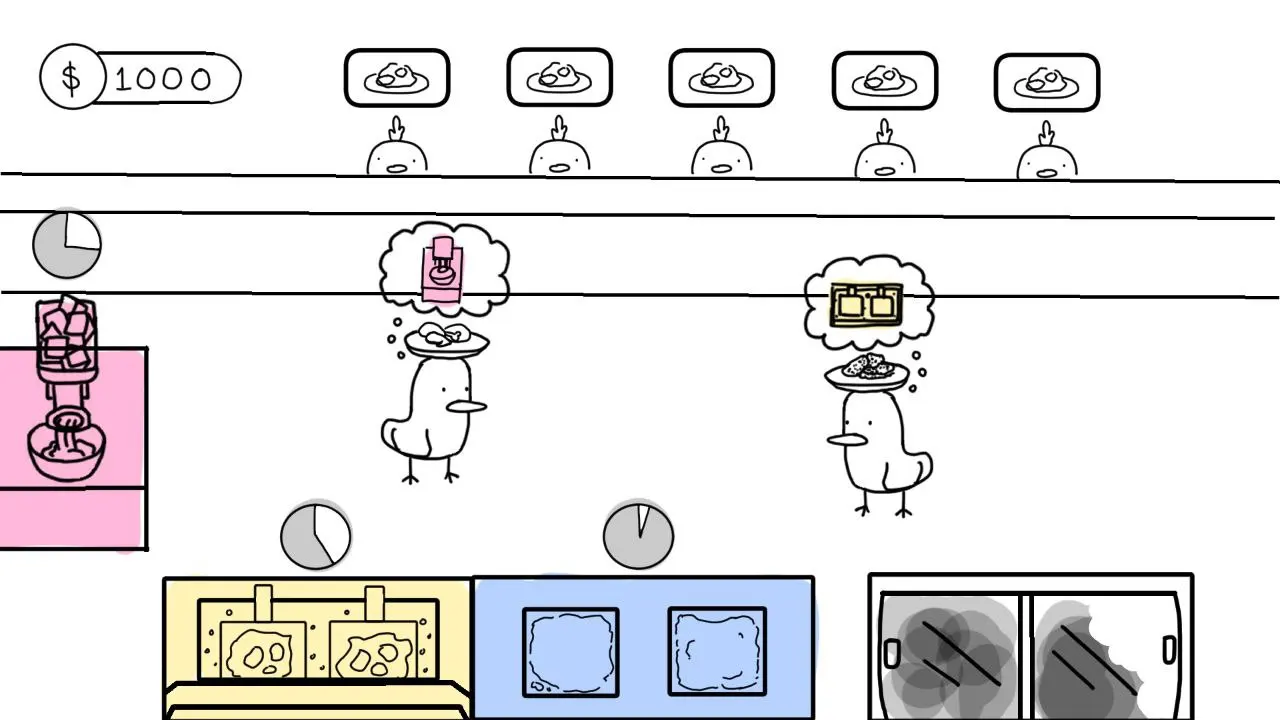
We began with paper prototypes to establish:
- Kitchen layout logic
- Player flow and interaction zones
- Spatial readability for co-op play
This low-cost planning stage informed both gameplay structure and visual requirements, allowing us to align art production with how assets would be placed, layered, and interacted with in-engine.
System Design: Separating Visual Layout from Interaction Logic
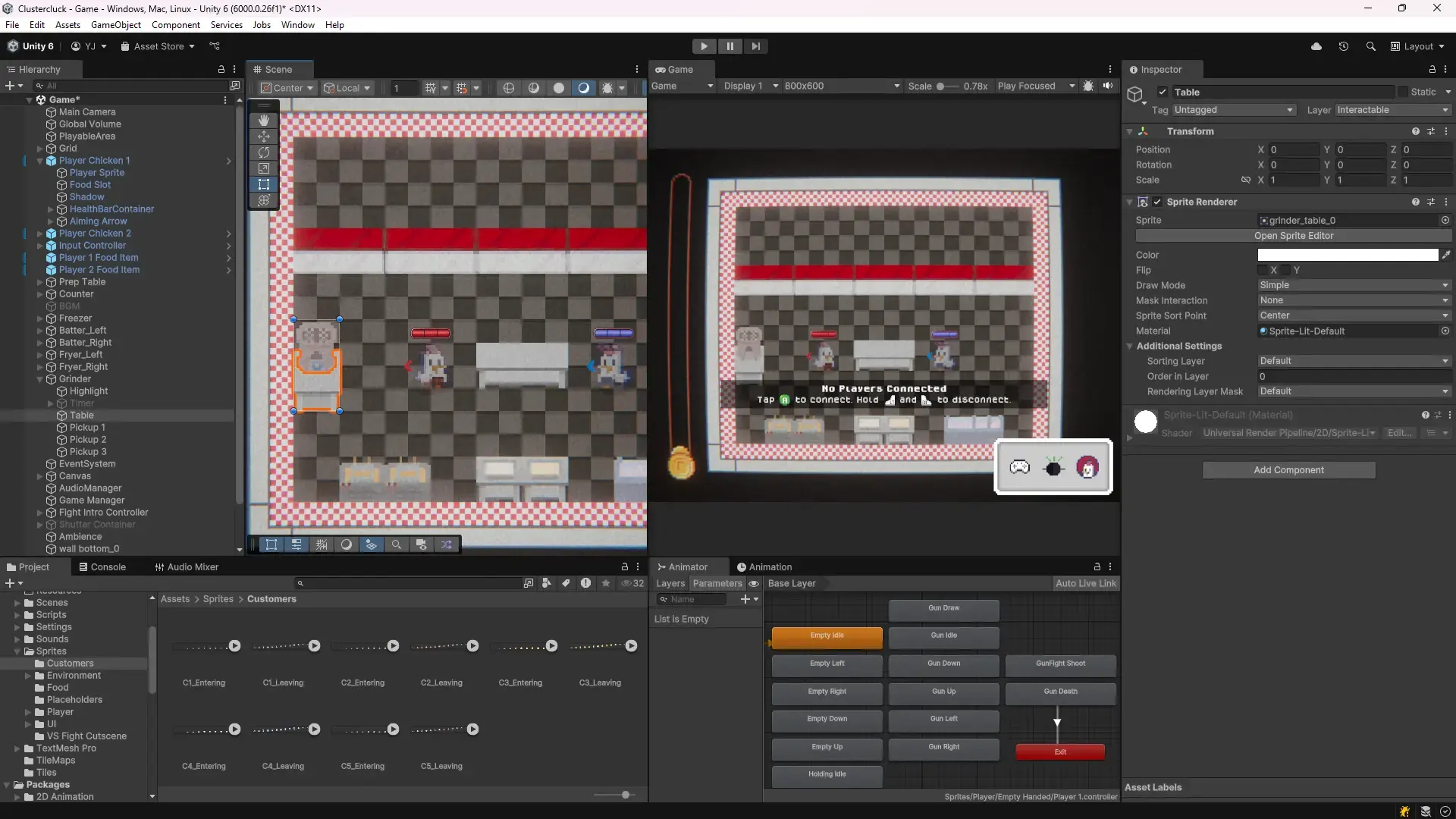
The game initially used a strict tilemap system for all elements, including floors, walls, and interactable objects. While effective for early layout and visual consistency, this approach introduced friction when implementing interactables:
- Grid constraints complicated interaction logic
- Debugging became increasingly time-consuming
- Minor layout changes had cascading technical costs
To resolve this, I restructured the system into two complementary layers:
- Tilemap system for static, non-interactive elements (floors, walls)
- Free-form placement system for interactable objects
This preserved the tiled visual language while allowing interactables to be positioned, tuned, and iterated on independently of grid constraints.
Impact on Art & Production
This hybrid system:
- Reduced implementation and debugging overhead
- Allowed artists to design interactables without fighting grid constraints
- Preserved visual cohesion while improving technical flexibility
- Enabled faster iteration late into development
By decoupling visual structure from interaction logic, we avoided unnecessary rework and kept production focused on polish rather than technical fixes.
Input & Implementation Support
To support the game’s cooperative design, I integrated controller support using Unity’s Input System, ensuring:
- Simultaneous two-player input without conflict
- Intuitive movement and interaction responsiveness
- Parity between visual feedback and player input
While not the project’s primary technical challenge, this work reinforced my role in bridging systems and player-facing experience, ensuring that implemented mechanics aligned with the game’s visual and cooperative intent.